
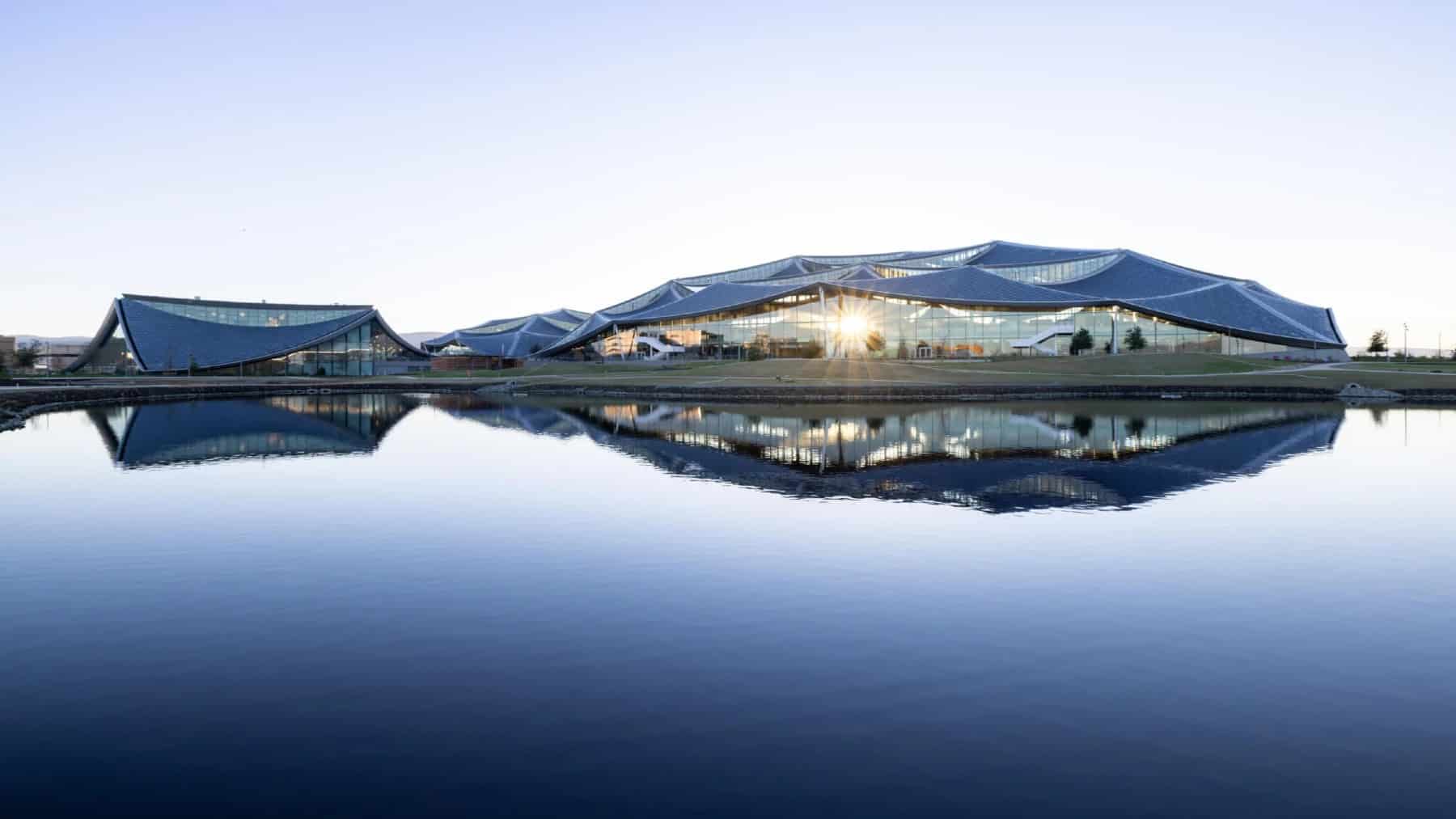
 Credits: Iwan Baan in The Architect's Newspaper
The Google Bay View campus is a sustainable masterpiece designed by BIG-Bjarke Ingels Group and Heatherwick Studio. Its most distinctive feature is the “dragonscale” solar skin, composed of 50,000 solar panels that not only generate energy but also deliver a futuristic appearance to the building. This article explores the technical aspects and design techniques that contribute to the functionality and operational results of this innovative solar skin system.
Transforming Renewable Energy Collection
The dragon-scale solar skin design is a product of innovative principles from BIG and Heatherwick Studio. The dragon-scale effect arises from panels that stack vertically, creating a unique roof design that maximizes energy efficiency while achieving aesthetic beauty.
The roof panels are made of tempered glass, known for their durability and walkability, which is essential for routine inspections. The design allows for thermal expansion, utilizing 35 square-inch segments. The glass surface minimizes reflection, crucial for a campus located near a small airport, and effectively distributes incoming light through clerestory windows.
Google’s 2030 Sustainability Goals
The Google Bay View campus aims to achieve 100% carbon-free energy by 2030 using its dragon-scale solar skin. It draws 40% of its energy from seven megawatts generated by solar panels, forming part of Google’s broader sustainability pledge to reduce carbon emissions.
The campus also features the largest geothermal pile system in North America, which reduces cooling water consumption by 90%. Each building element contributes to its overall sustainability goals through a comprehensive approach involving both geothermal technology and solar power.
Smart and Aesthetic Design
The dragon-scale solar skin is more than just visually appealing; it enhances operational efficiency as well. The roof structure maximizes daylight entry, which reduces indoor lighting needs and creates favorable conditions for employees. The clerestory windows in the canopy roof design balance natural lighting with reduced sun exposure.
Furthermore, the roof facilitates rainwater collection, enabling the campus to meet water positivity standards by fulfilling all non-potable water needs and processing wastewater from nearby facilities. This system could position Bay View as the largest facility to achieve Water Petal certification from the International Living Future Institute.
Architectural Innovation with Global Implications
The design of the Google Bay View campus sets a sustainable model for future projects. The dragonscale solar skin exemplifies how creative engineering can enhance both aesthetics and operational efficiency. The campus merges cutting-edge technology with sustainability, showcasing the potential for visually attractive buildings that also protect ecosystems.
The dragonscale solar skin has significant implications for the construction market, demonstrating the effectiveness of building-integrated photovoltaics (BIPV) and encouraging developers to adopt similar strategies. The successful implementation of this innovative design requires collaboration among architects, engineers, and sustainability experts.
The Google Bay View campus stands as a remarkable example of how modern technology can create operationally efficient and visually stunning architectural structures, paving the way for future environmental sustainability.




Comments
Join Our Community
Sign up to share your thoughts, engage with others, and become part of our growing community.
No comments yet
Be the first to share your thoughts and start the conversation!